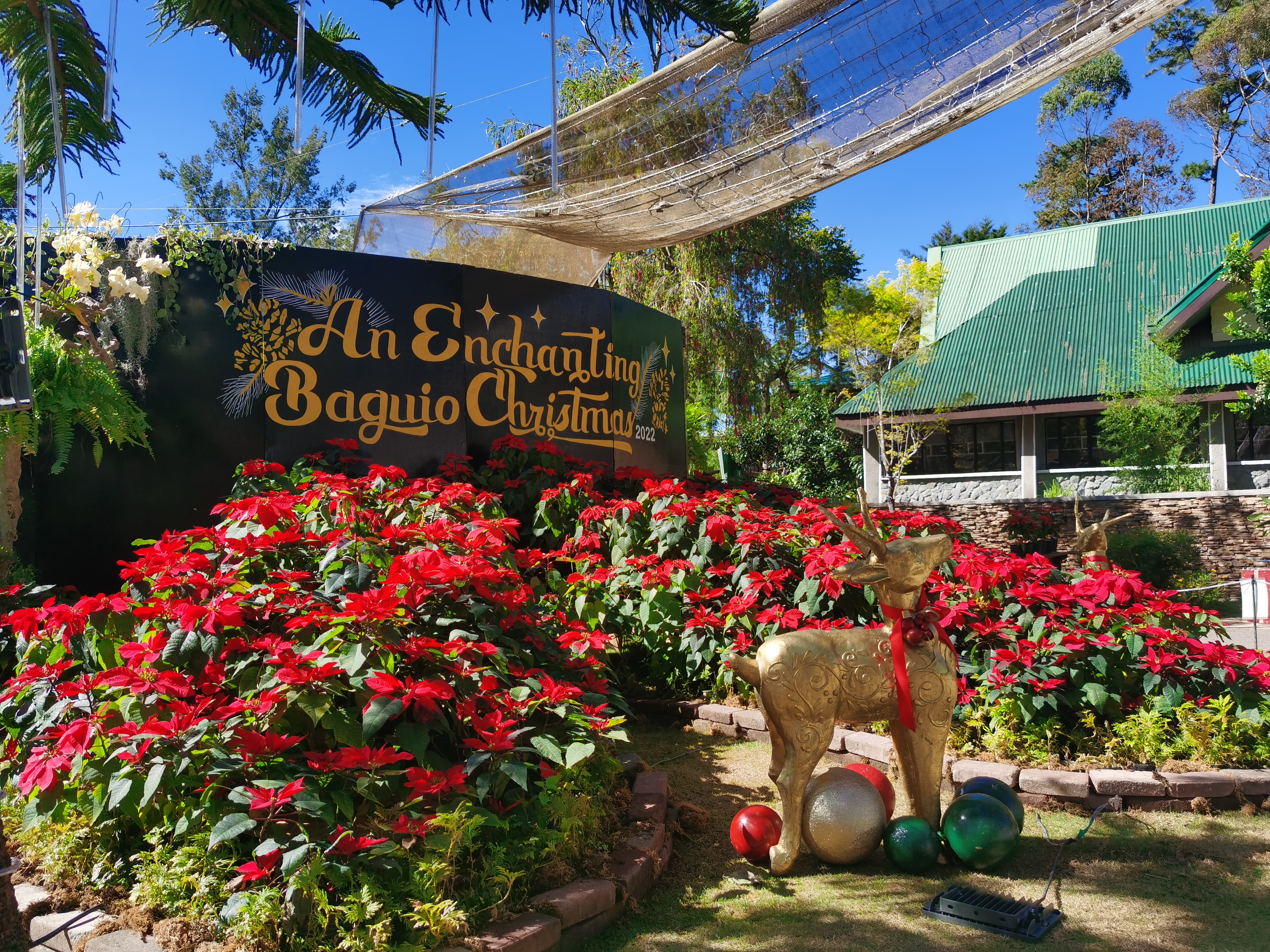
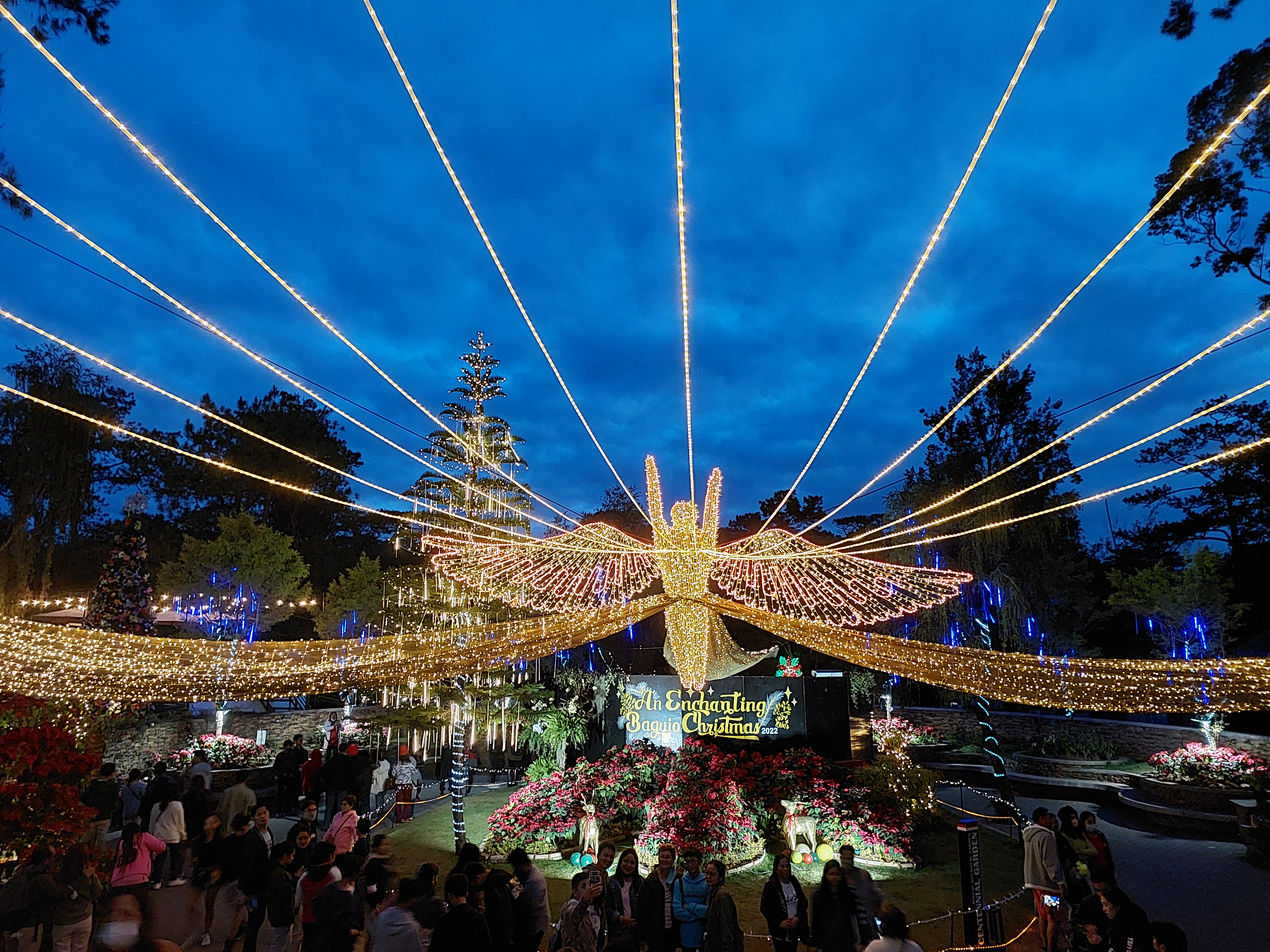
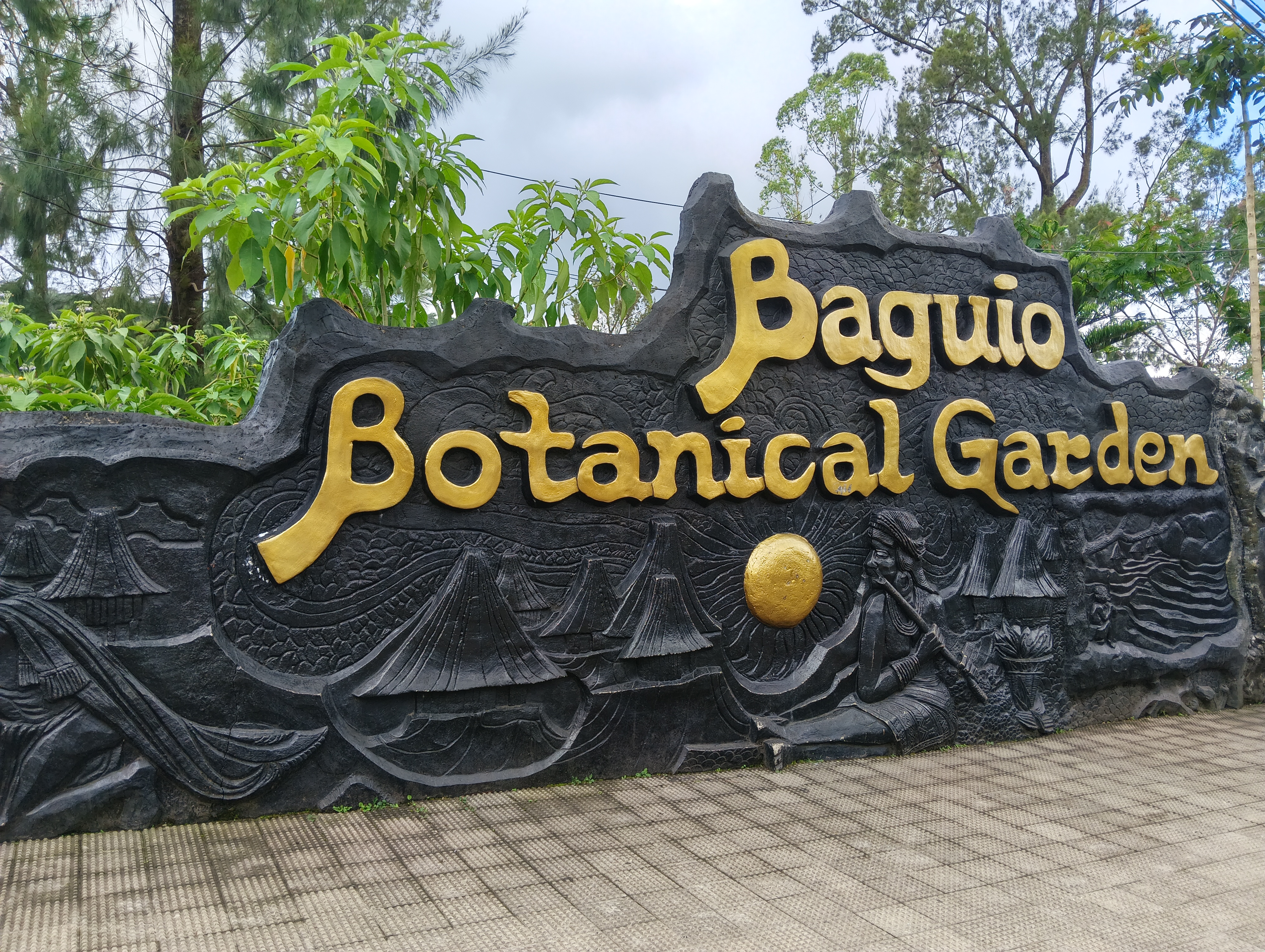
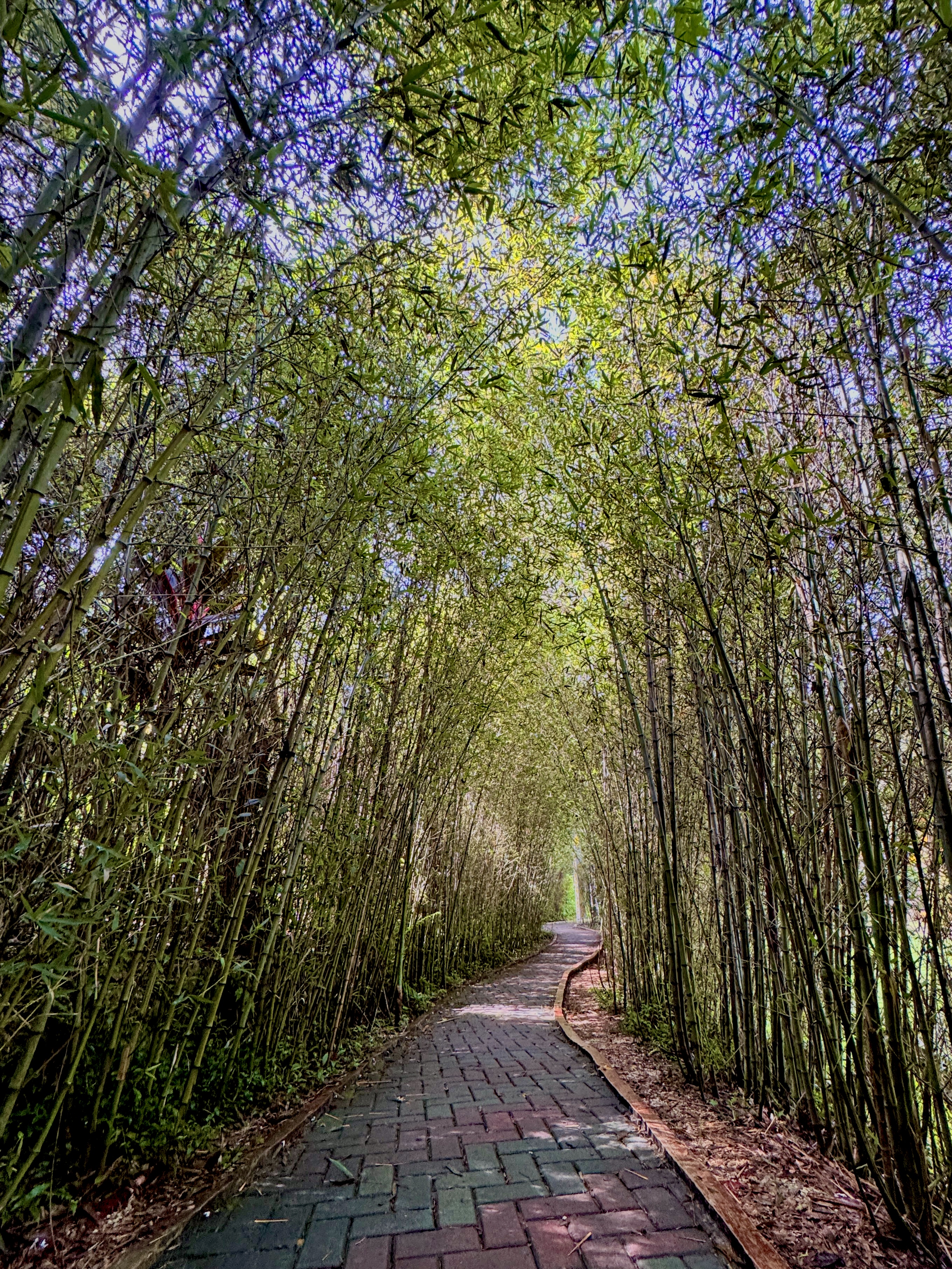
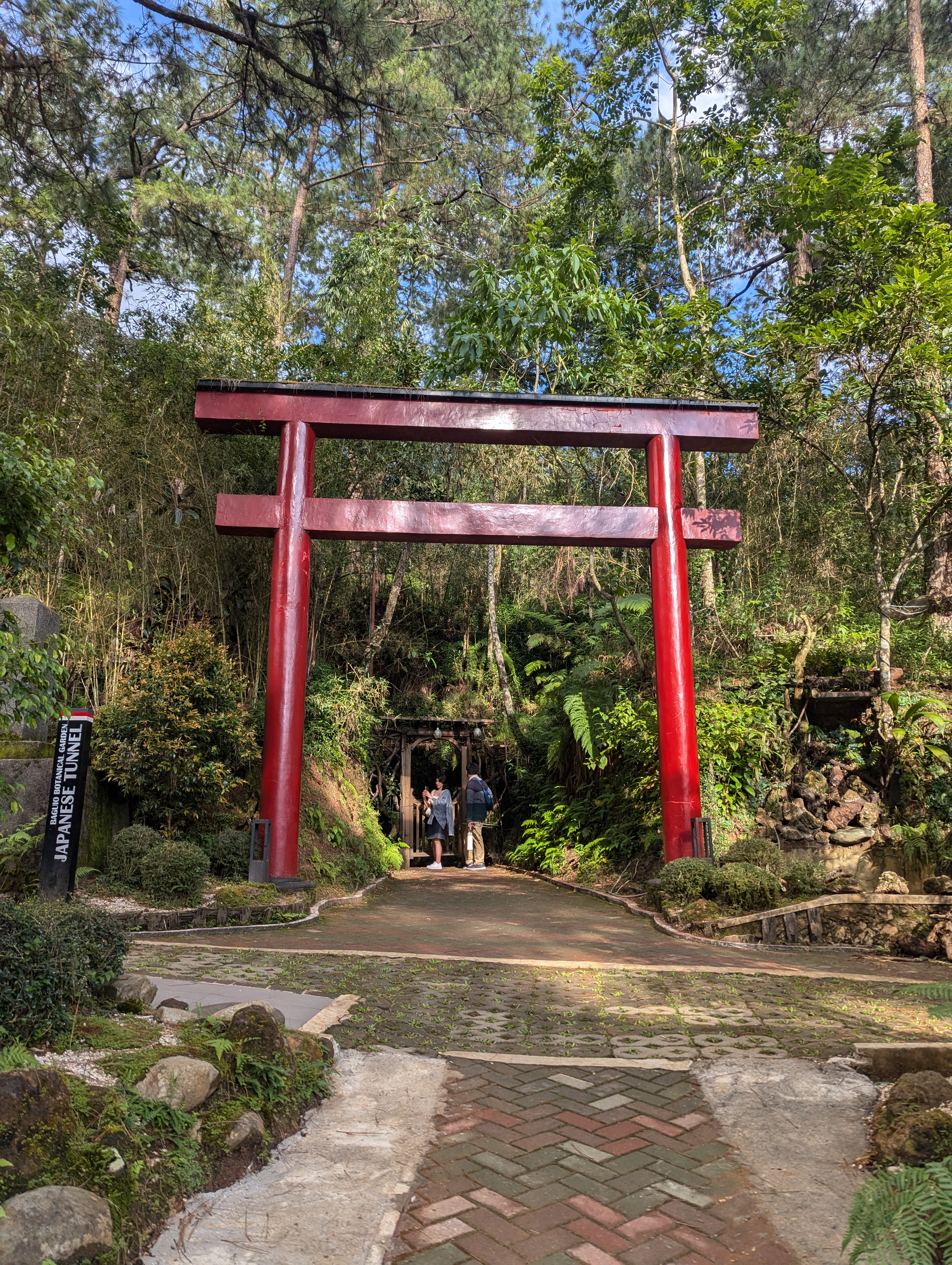
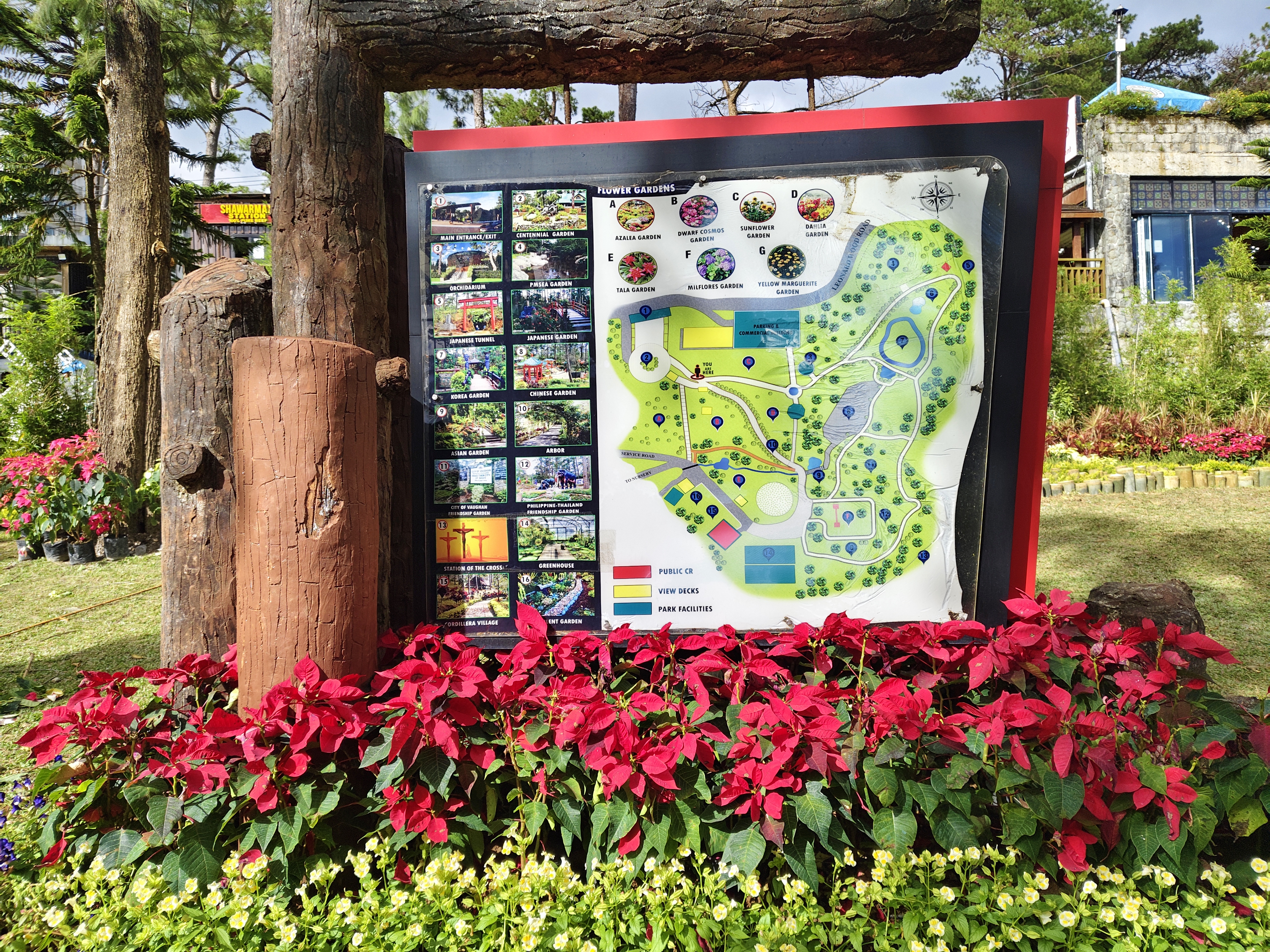
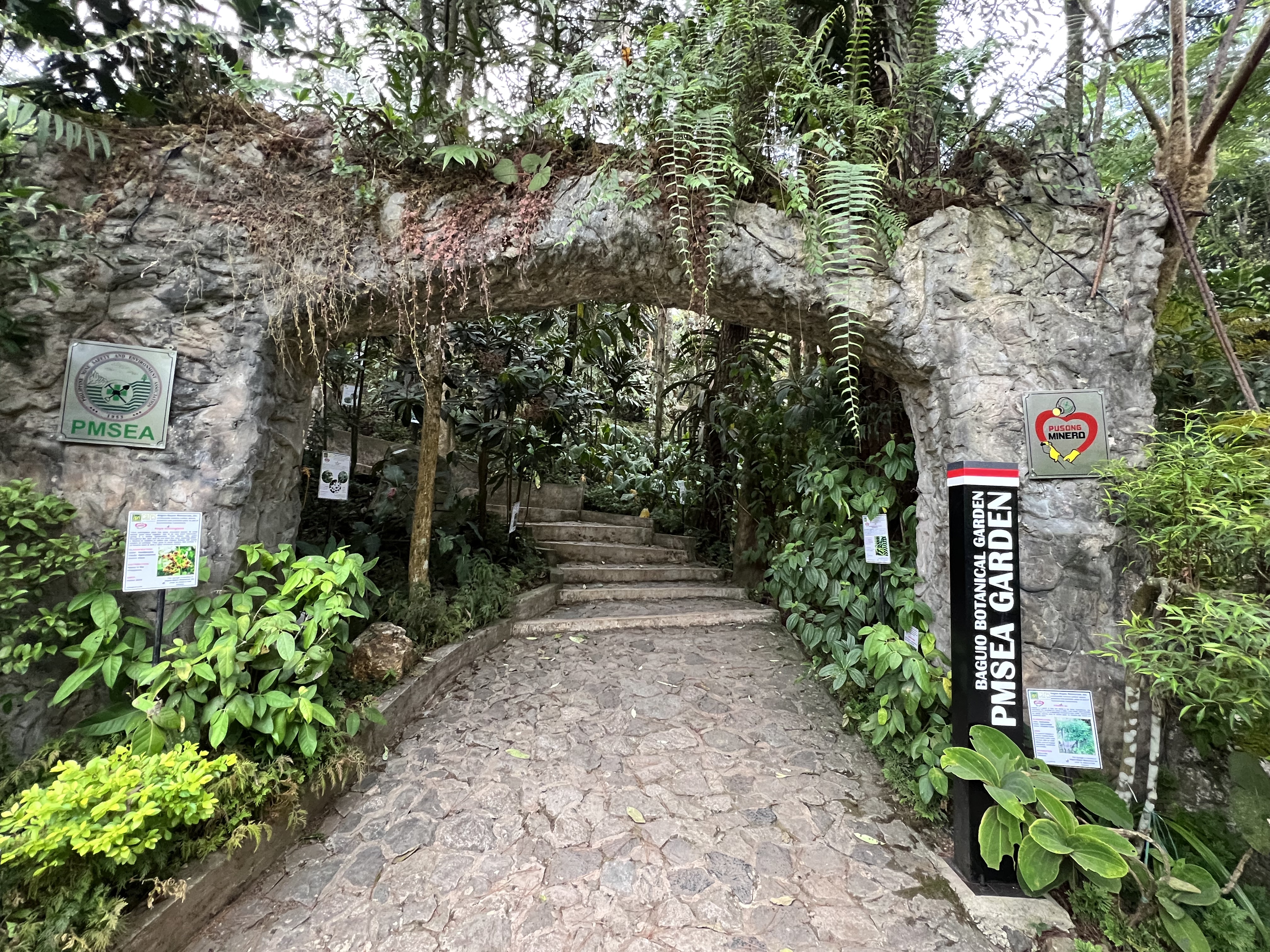
Welcome to Baguio Botanical Garden, widely recognized as the central Botanical Garden of Baguio. Located in the heart of Baguio City, Benguet,Philippines, this destination serves as a primary hub for travelers visiting the region.
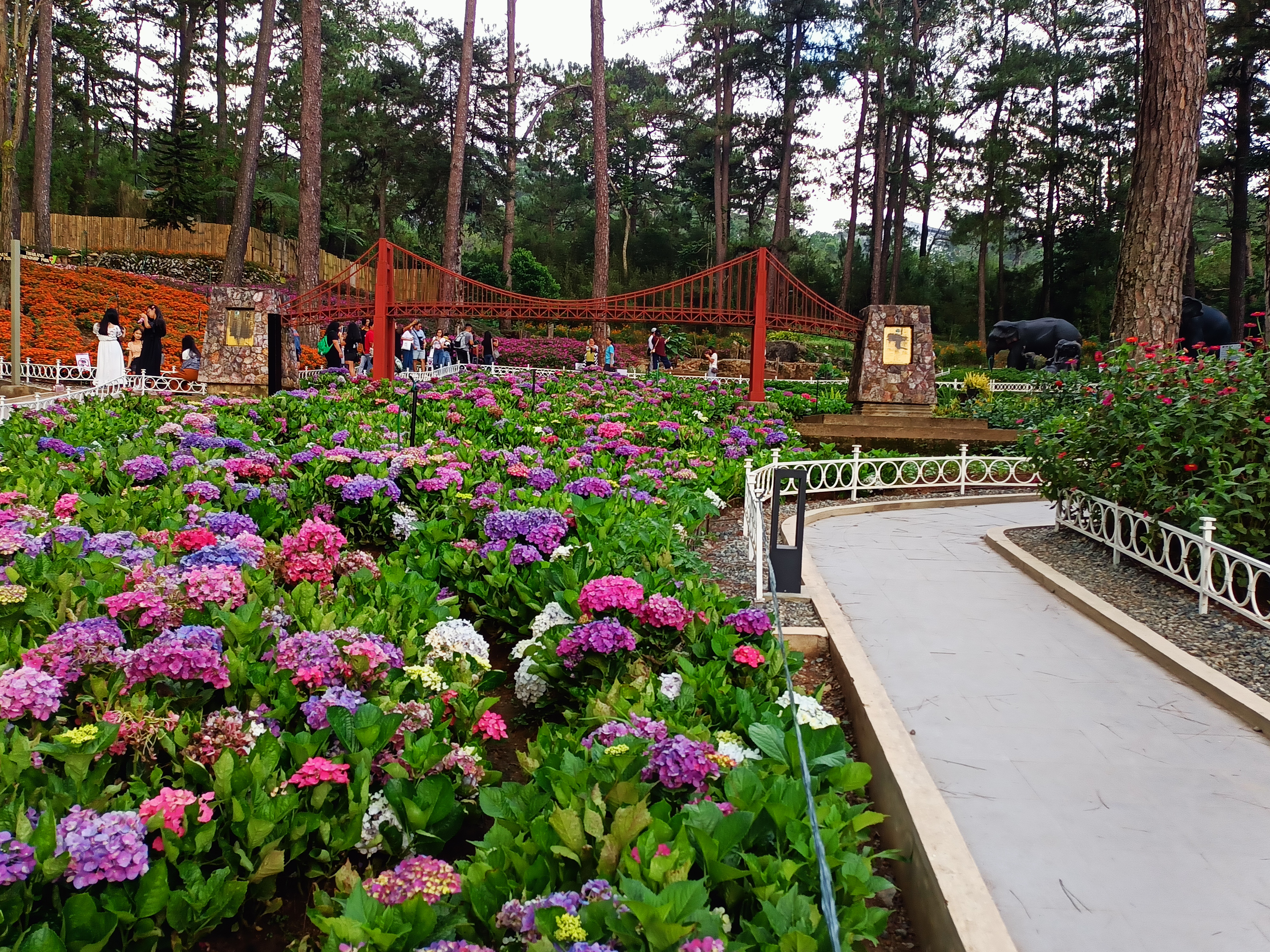
The Baguio Botanical Garden is a 5-hectare public garden located on Leonard Wood Road, Baguio City, Philippines. It is a living showcase of the rich botanical biodiversity of the Cordillera region, international friendship, and indigenous Igorot culture.
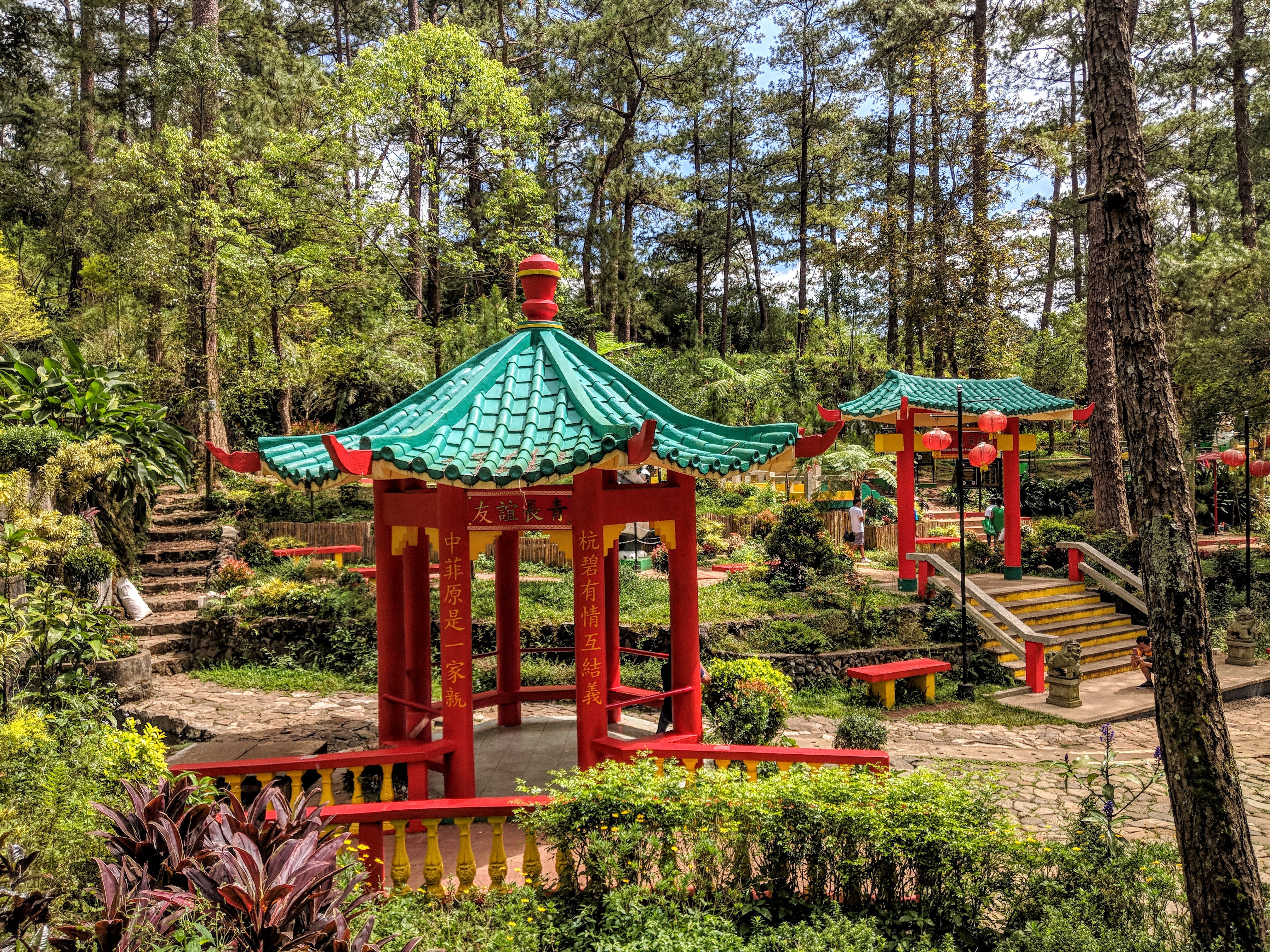
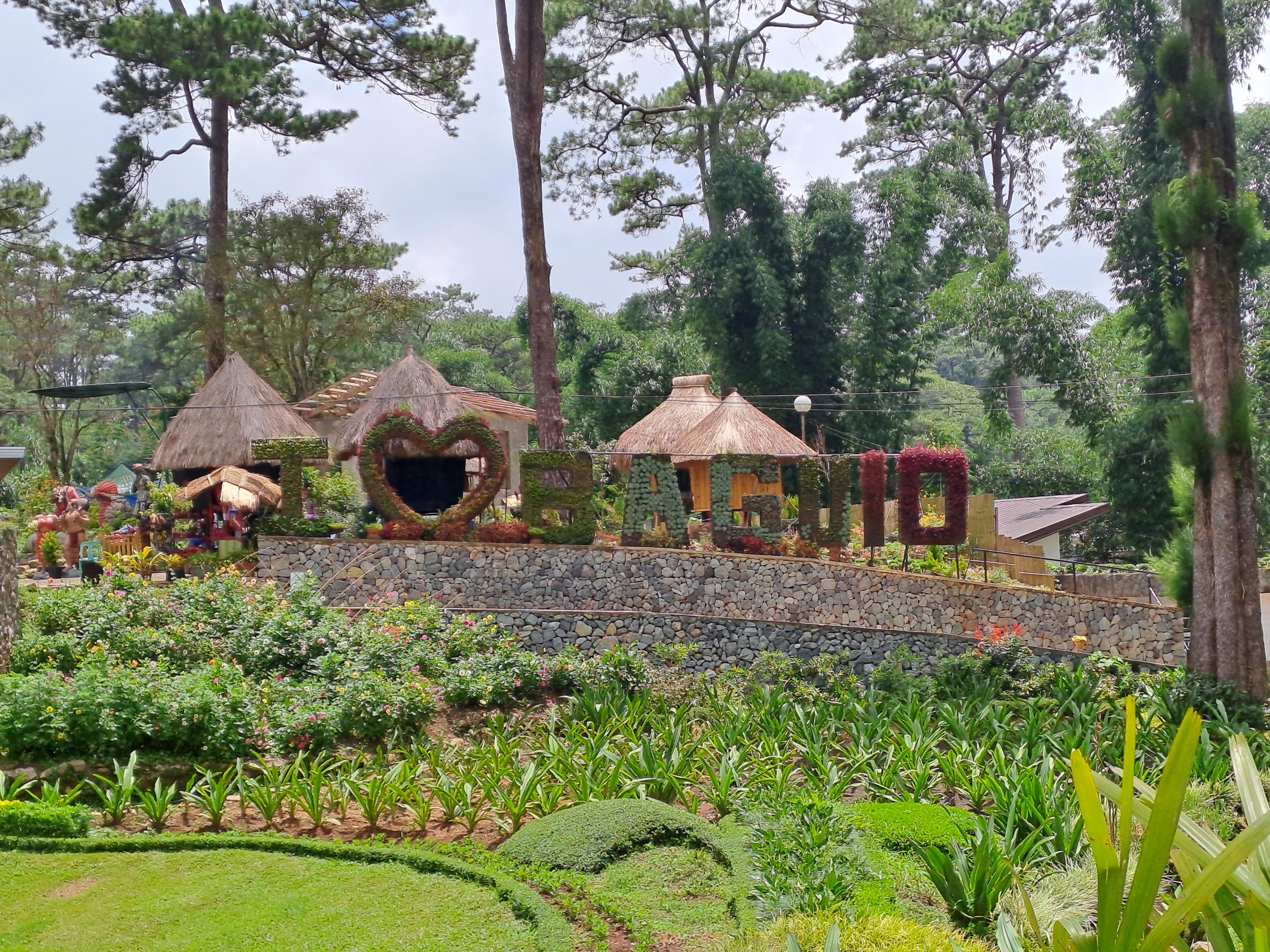
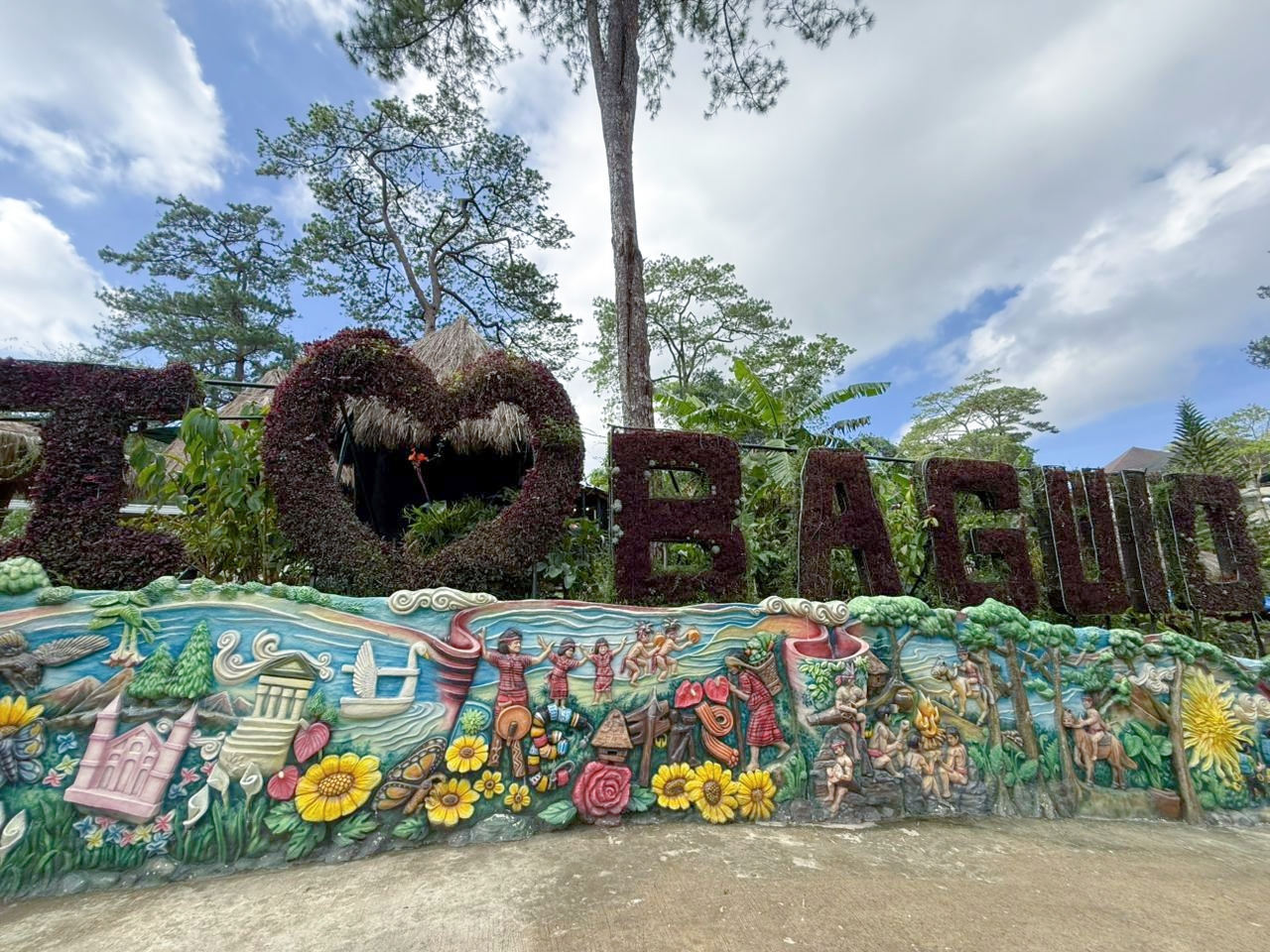
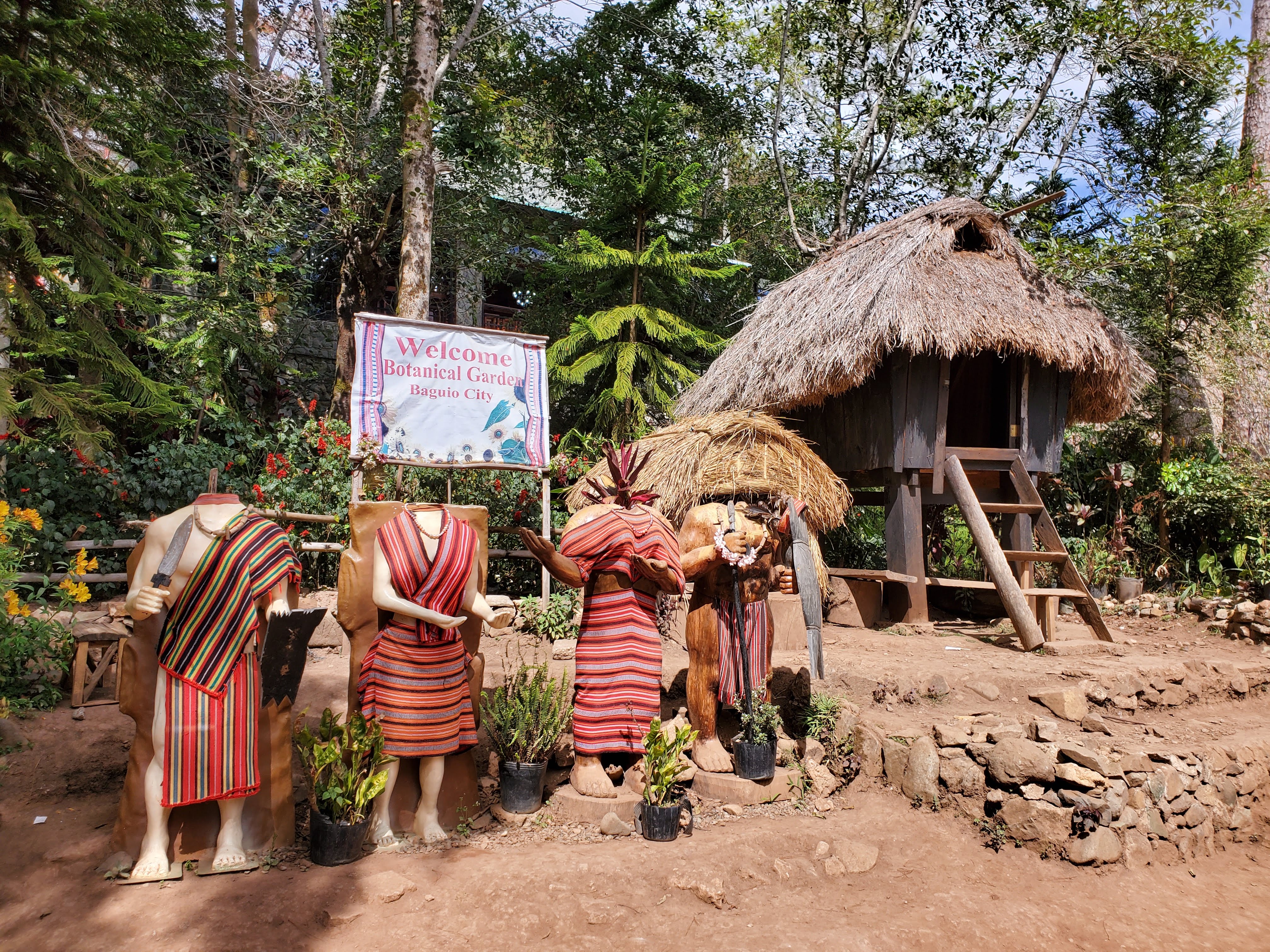
The garden features themed gardens representing Chinese, Japanese, Korean, and Philippine native flora, an International Friendship Garden, a Cordillera Village with traditional Igorot huts, and a Sculpture Garden with bronze artworks by Ben Hur Villanueva and local artists.
Situated at 1,540 meters above sea level, the garden enjoys a cool mountain climate year-round — a perfect escape from the tropical heat. The surrounding pine forests provide crisp mountain air and a serene natural backdrop.
🌲 Pine Forest🏔️ 1,540m Altitude🌺 5 Hectares
🌤️ Weather
Weather & 7-Day Forecast
Live conditions for the garden with plain-language advice: what to wear, how to plan the walk and what to pack — nothing you have to work out yourself.
⚠️ Weather alerts
⛈️Thunderstorms are expected. Stay off exposed ridges and open lawns, never shelter under the tall pines, and wait out the storm in a building or covered area.
🌧️Heavy rain is expected. Keep away from valley floors, drainage channels and cut slopes — mountain terrain can produce flash floods and landslides.
Now at the garden
21°C
Heavy drizzle
🌧️
Rain chance100%
Feels like
24°C
Humidity
91%Very humid
Wind
2 km/hCalm
Sun strength
High
Updated: 05:45 AM
Next 7 days
Today
⛈️
Thunderstorm
24° / 16°
🌧️100%
Sun, Sep 20
⛈️
Thunderstorm
24° / 16°
🌧️100%
Mon, Sep 21
⛈️
Thunderstorm
23° / 16°
🌧️100%
Tue, Sep 22
⛈️
Thunderstorm
25° / 15°
🌧️100%
Wed, Sep 23
🌦️
Light showers
25° / 15°
🌧️100%
Thu, Sep 24
🌦️
Light drizzle
25° / 14°
🌧️100%
Fri, Sep 25
⛈️
Thunderstorm
22° / 16°
🌧️96%
👕 What to wear
👕Mild highland weather (16–24°C) — comfortable walking clothes are fine.
🧥Rain is expected — a waterproof jacket or raincoat works better than an umbrella on the windy, stepped paths.
🧢The sun is strong at 1,540 m — light long sleeves and a hat help even when the air feels cool.
🗺️ How to plan the visit
⛈️Thunderstorms — skip the exposed ridge and the open lawns, and do not stand under tall trees.
🕶️Strong UV around midday — use the pine shade and the covered areas between 11:00 and 15:00.
⚠️The garden has many stepped and sloped paths — they stay slick for hours after rain.
🎒 What to bring
🧥Raincoat (skip long umbrellas in wind)
👟Non-slip walking shoes
🎒Waterproof cover for camera / phone
🧴Sunscreen
🕶️Sunglasses
🧢Hat or cap
💧Water bottle
🧥Light jacket / extra layer
🦟Insect repellent
Highland weather changes fast — this forecast updates automatically while the page is open.
📜 History
History & Significance of Baguio Botanical Garden
From American colonial nursery to world-class botanical garden — and the folk tales that give meaning to every corner.
1
Before the 1900s
Land of the Ibaloi & Kankanaey
Before it became a garden, the site was part of the pine forest and watershed within the ancestral domain of the Ibaloi and Kankanaey peoples. The pines were managed as a source of timber, medicine, and protection against erosion on steep slopes.
2
1900–1909
The Burnham Plan for Baguio
As Baguio was built as a summer capital, the plan by architect and urban planner Daniel Burnham reserved large areas of the city for parks and open space. Nursery sites such as this one were used to grow the trees and plants needed for the new roads and parks.
3
Early 1900s
American Colonial Era
Established by the Americans as part of the plan for Baguio as the "Summer Capital" of the Philippines. Originally used as a nursery for plants and trees to beautify the new city.
4
1941–1945
The War Years
During the Second World War, Baguio became an administrative centre and later suffered heavy damage during the liberation of the city in 1945. Public parks and nurseries were neglected, and many plant collections were lost before replanting in the following decades.
5
1950s–1960s
Expansion Era
The garden was expanded and transformed into a formal botanical collection. Exotic and native species were introduced. The area became a popular destination for botany students and picnicking families.
6
1970s
The Imelda Park Era
Known as "Imelda Park" — named after former First Lady Imelda Marcos. During this period, many structures and sculptures were added as part of her nationwide beautification program.
7
1980s–1990s
Renaming & Renewal
After the 1986 EDSA Revolution, renamed from "Imelda Park" to "Baguio Botanical Garden." Efforts began to transform it into a showcase of indigenous Cordillera culture and biodiversity.
8
1990
The Luzon Earthquake & Rehabilitation
The strong July 1990 earthquake caused widespread damage across Baguio, including public buildings, roads, and parks. The rehabilitation years that followed reopened the question of how to reorganise the city public green spaces and strengthen the garden role as an evacuation-friendly open area.
9
2000s–Present
Modern Botanical Garden
The garden continues to be developed as a major tourist destination and educational resource. International friendship gardens were added as symbols of Baguio's relationships with various countries. The Cordillera Village brings traditional Igorot culture to life.
📖Legends & Folk Tales
The Cordillera region is rich in oral tradition. These stories have been passed down through generations.
🌲
The Legend of Baguio's Pine Trees
According to Ibaloi oral tradition, the first pine trees were giant warriors from the sky who chose to remain on earth to protect the mountain people. Kabunian (the Igorot God) gave them wooden bodies to live forever, and their needle-like leaves remind us of the sharpness of their former weapons. The pine forests surrounding the Botanical Garden are said to be descendants of these ancient warriors.
🧚
The Spirit of the Flowers
An Ibaloi tale tells of "Bangan," a nature spirit who dwells in what is now the Botanical Garden. She was the guardian of all flowers and ensured every plant bloomed at its proper time. It is said that at dawn, when the first rays of sunlight touch the flowers, Bangan's soft singing can be heard. The diverse colors of the garden's flowers are said to be her gift to the people of Baguio.
🌏
The Mystery of the Friendship Garden
In the 1980s, when the International Friendship Garden was first established, an elderly Ifugao storyteller said: "Plants from different nations will grow together, and their roots will weave an invisible bridge between cultures." Today, the Friendship Garden hosts plants from China, Japan, Korea, Thailand, and other countries — all growing together in the same Cordillera soil, just as the storyteller prophesied.
🗿
The Mystery of the Igorot Sculptures
Ben Hur Villanueva's bronze sculptures in the Sculpture Garden are said to possess "the spirit of the highlands." According to locals, at night under a full moon, the sculptures appear to move — an illusion created by the interplay of light and shadow on bronze. It is said that this was the artist's way of showing that Cordillera culture is not static — it continues to breathe and move in modern times.
🌫️
Where the Fog of Baguio Comes From
A popular folktale explains why the city is so often wrapped in fog. According to elders, the cloud is the breath of the mountains descending each morning to check that the trees are still well. When the fog lifts earlier than usual, they say the mountain is "waiting" — a sign for farmers to prepare for a change in the weather.
🌱
The First Seed
A nursery workers story says the first tree planted here was a Benguet pine moved down from a higher slope. It is said to have survived several transplantings, and was used as a "mother tree" for seedlings across the city. The story is a reminder that tree planting is work passed from one generation to the next.
📅 Strategy
Seasonal Visit Strategy
Mountain weather in Baguio changes sharply between the cool dry months and the rainy season. Use this table to match your visit to the conditions you prefer.
Season
Weather & crowd
Recommended strategy
What to bring
What to look for
❄️Cool Dry Season
December – February
Coolest period: typically 8–12°C at dawn and 18–22°C at midday. Rainfall is low, but thick morning fog is common.
Highest — Christmas, New Year, and the Panagbenga Festival in February.
Enter between 7:00–9:00 AM for a quiet garden and soft light. Avoid 10:00 AM–4:00 PM if you want to skip the crowds.
A warm jacket, gloves, scarf, and layered clothing for cold mornings.
Fog drifting through the pine forest, seasonal flower displays, and the clearest views.
☀️Warm Dry Season
March – May
Warmest and driest: 15–26°C, with a high UV index at midday and little rain.
Moderate to high — Holy Week and the start of the summer holiday period.
Explore before 10:00 AM or after 3:00 PM. Rest in shaded areas at midday and drink plenty of water.
Sunscreen, a hat, sunglasses, and a reusable water bottle.
Fresh growth and flowering plants; the highest visibility for landscape views.
🌧️Rainy / Typhoon Season
June – October
High humidity with frequent afternoon and evening rain; tropical storms can affect travel plans.
Lowest — the garden is quiet, especially on weekdays.
Check the forecast before leaving; plan your visit for the morning, bring rain gear, and avoid slippery paths. Some mountain roads may temporarily close.
A folding umbrella or rain jacket, non-slip shoes, and quick-dry clothing.
The greenest moss and ferns and a true cloud-forest atmosphere — plus dramatic mist over the pines.
🍃Shoulder Season
November and late May
A transitional period: generally moderate temperatures, limited rainfall, and fewer visitors than the peak months.
Low to moderate — ideal for a calm visit.
The best balance of pleasant weather and fewer people. Try a weekday for the quietest experience.
A light jacket for the evening plus an umbrella as a precaution.
Stable conditions for photography and lower accommodation rates.
Figures are general climate patterns for the highlands, not a daily forecast — check the weather module above before you travel.
🧭 Routes
Routes by Visitor Type
Three tested ways to walk Baguio Botanical Garden depending on who you are travelling with and how much energy you want to spend.
👨👩👧
Families with Children
Duration: 2–3 hours
A slow, safe route with plenty of rest spots, open spaces, and story elements that children can easily connect with.
Route
•Entrance plaza — buy tickets and use the restrooms before starting
•Main pine path — wide and mostly level, easy to walk
•Open lawn and seating area — rest and snacks
•Chinese Garden — moon gate and shaped planters
•Japanese Garden — bridge, pond, and clean lines
•Cordillera Village — traditional houses and costume photos
•Souvenir area near the exit — end the loop here
Practical notes
✓Use the level main paths if you have a stroller
✓Bring your own water and snacks — sales inside are limited
✓Avoid midday on weekends when crowds peak
✓Carry small change for restrooms and small purchases
✓Agree on a meeting point near the entrance in case the group splits
📷
Photography & Nature
Duration: 3–4 hours
A route for photographers and plant enthusiasts, organised around light, texture, and fine natural detail.
Route
•Early morning on the pine path — light rays between the trunks
•Moss and fern wall — macro details after rain
•Chinese Garden — the moon gate as a natural frame
•Japanese Garden — reflections on the pond
•Sculpture Garden — bronze texture in diffused light
•International Friendship Garden — comparing species
•Upper viewpoint — wide views over the city and mountains
Practical notes
✓Best light: 7:00–10:00 AM and late afternoon before 5:00 PM
✓Fog scenes are excellent on cold-season mornings
✓Wear non-slip shoes — stone surfaces are slippery when wet
✓Do not step into flower beds for a composition
✓Drones usually require permission — ask management first
♿
Low-Mobility & Accessible
Duration: 1–1.5 hours
The shortest route, using level paths and seating areas, with minimal climbing and close access to facilities.
Route
•Drop-off point near the main entrance on Leonard Wood Road
•Accessible restroom near the entrance
•Level main path toward the open lawn
•Shaded seating area — rest and enjoy the view
•Outer section of the Chinese Garden — on the level side
•Return to the entrance along the same path
Practical notes
✓Some parts of the garden have steps and slopes — stay on the main paths
✓Visiting in dry weather is safer — stone is slippery when wet
✓Ask at the entrance about current ramp and path conditions on the day
✓Bring a companion if you need help on sloped sections
✓Plan a rest every 15–20 minutes because of the 1,400m+ altitude
🗺️ Itineraries
Suggested Itineraries
Half-day and full-day plans that start at Baguio Botanical Garden and connect naturally to the surrounding landmarks.
⏱️Half-Day Route (About 3 Hours)
3 hours
Ideal when time is limited or you are travelling with children — focused on the main themed gardens plus one nearby park.
07:30
Arrive at the main entrance — buy tickets and read the site map
07:45
Main pine path — walk slowly in the cool morning air
08:15
Chinese Garden — moon gate, pavilion, and planters
09:00
Japanese Garden — pond, bridge, and Japanese landscaping
09:45
Cordillera Village — traditional houses and the costume experience
10:30
Sculpture Garden and Friendship Garden — art and plants from other countries
11:00
Cross to Wright Park (3 minutes) for the Pool of Pines
12:00
Lunch at the dining options near Leonard Wood Road
🗺️Full-Day Route (About 7 Hours)
7 hours
Combines the Botanical Garden with nearby landmarks in one complete walking and short-ride tour.
07:30
Baguio Botanical Garden — full loop of the themed gardens (2 hours)
09:30
Wright Park — Pool of Pines and the horseback riding area (30 minutes)
10:15
The Mansion — gate area and photos (30 minutes)
11:00
Mines View Park — observation deck and views (45 minutes)
12:00
Lunch and rest
13:30
Good Shepherd — local products and souvenirs (30 minutes)
14:30
City museum and cathedral area — culture and history
16:00
Session Road — coffee, rest, and final shopping
17:30
Return to your accommodation before dark
Times are flexible: allow extra minutes for ticketing, photos, and the steep sections between the themed gardens.
🏯 Attractions
Themed Gardens & Attractions
Eight themed gardens showcasing international friendship, biodiversity, and Cordillera culture.
🏯
Chinese Garden
Chinese
A serene garden featuring traditional Chinese architecture — arched bridge, moon gate, pavilion, and koi pond. A gift from the Chinese community of Baguio as a symbol of friendship.
Highlights
Moon gate for the perfect photo
Stone bridge over koi pond
Traditional Chinese pavilion
Bamboo groves and cherry blossom trees
⛩️
Japanese Garden
Japanese
A Zen-inspired garden with a torii gate, stone lanterns, bonsai collection, and meticulously raked gravel. The minimalist design invites contemplation and tranquility.
Highlights
Torii gate — symbol of entering sacred space
Japanese stone lantern (tōrō)
Bonsai collection of local pines
Zen rock garden with raked gravel
🏛️
Korean Garden
Korean
A vibrant garden with a traditional Korean pagoda, hanok-inspired structure, and plants like royal azalea and Korean pine. Reflects traditional Korean landscape design.
Highlights
Traditional Korean pagoda
Royal azaleas blooming February–April
Hanok-inspired pavilion
Korean stone statues
🌿
Philippine Native Plant Garden
Native Plants
A collection of native plants from the Cordillera region and across the Philippines — from rafflesia and waling-waling to pine trees and giant ferns. A showcase of the country's rich biodiversity.
Highlights
Waling-waling (Vanda sanderiana) — "Queen of Philippine Orchids"
Giant tree ferns (Cyathea) from the Cordillera
Pitcher plants (Nepenthes) — carnivorous plants
Benguet pine (Pinus kesiya) grove
🛖
Cordillera Village
Igorot Culture
A replica of a traditional Igorot village featuring native houses (bale), miniature rice terraces, and bronze sculptures by Ben Hur Villanueva. Visitors can wear traditional Igorot attire for photos.
Highlights
Traditional Igorot hut (bale) — made of wood and cogon grass
Miniature Banaue Rice Terraces
Bronze sculptures by Ben Hur Villanueva
Photo op: wear bahag, tapis, and traditional attire
🌺
Tropical Rain Garden
Tropical
A lush, humid garden filled with heliconias, gingers, bromeliads, and plants from the tropical rainforest. Colorful flowers bloom year-round in Baguio's cool climate.
Highlights
Vibrant heliconias and bird of paradise
Bromeliads growing on trees (epiphytes)
Orchid wall with various orchid species
Shaded walkway surrounded by giant leaves
🌏
International Friendship Garden
International
A garden celebrating Baguio's friendship with various nations. Each country has its own section featuring characteristic plants and design elements from their respective cultures.
Highlights
Thai pavilion and lotus pond
Taiwanese rock garden
Indonesian tropical corner
Friendship plaques from various sister cities
🎨
Sculpture Garden
Art
An open-air sculpture garden featuring artworks by local Cordillera artists. Includes bronze sculptures, wood carvings, and stone installations that tell stories of highland culture.
Highlights
Bronze sculptures by Ben Hur Villanueva
Wood carvings by Ifugao artists
Stone installations with Cordillera motifs
Rotating exhibition of local artists
⭐ Reviews
Google Maps Reviews
Ratings and reviews quoted from Baguio Botanical Garden on Google Maps — shown here for reference only, with the source credited.
4.5
8,354 Google Maps reviews
Baguio Botanical Garden (Baguio) is rated 4.5 out of 5 by Google Maps users. The rating and review count below were synced in September 2026 and may change over time — always check Google Maps for the latest figure.
Source note: Synced from Google Maps user reviews, synced September 2026; copyright belongs to the original authors and Google Maps.
Maria Clara Reyes
August 2026 · Google Maps user review
The themed gardens are beautiful — especially the Chinese Garden and Japanese Garden. We arrived before 8 AM so it was quiet and the air was cool. The ₱100 entrance fee is worth it for a whole day of exploring.
Daniel Ocampo
July 2026 · Google Maps user review
The Cordillera Village is my favourite part — the Igorot huts feel authentic and we even wore traditional attire for photos. It is also great for families because the paths are clean and well maintained.
Jasmine Lim
June 2026 · Google Maps user review
A great place for photography — plenty of spots from the moon gate to the sculpture garden. It gets crowded around midday, so it is better to come early or later in the afternoon.
Ramon Villanueva
May 2026 · Google Maps user review
It is very close to Wright Park and The Mansion, so it is easy to include in a one-day walking tour. Easy to find because it sits right on Leonard Wood Road with a large sign at the entrance.
Andrea Santos
April 2026 · Google Maps user review
The plants are lovely and the restrooms are clean. Students pay only ₱50, so it is affordable for groups. Bring a jacket because it really is cold in the morning.
Michael Tan
March 2026 · Google Maps user review
A peaceful retreat in the middle of the city. The surrounding pine trees are beautiful and the air is fresh. We spent almost three hours walking through the eight themed gardens.
Everything you need for a comfortable visit — restrooms, parking, dining, accommodation, shopping, fuel, and medical services. This is a neutral, non-commercial guide.
🚻
Restrooms (WC)
Clean restrooms are available inside the garden — located near the entrance, near the Chinese Garden, and beside the Cordillera Village. All have running water, soap, and toilet paper.
Some restrooms have a ₱5–10 maintenance fee
Separate facilities for men and women
Accessible toilet for PWDs near the entrance
Bring your own wet wipes for extra cleanliness
🅿️
Parking
Adequate parking is available in front of the Botanical Garden. Fee ranges from ₱50–80 for the whole day. During peak season (Panagbenga and holidays), it may fill up — arrive early or use alternative parking.
₱50 parking fee for motorcycles, ₱80 for cars
Alternative parking: beside Wright Park (5-minute walk)
Alternative parking: near Teacher's Camp (10-minute walk)
Avoid parking along Leonard Wood Road — strictly prohibited
If the lot is full, drop off first and use a large shopping mall car park about 10 minutes away (around ₱40/day)
🍽️
Dining
There are no restaurants inside the Botanical Garden itself, but plenty of dining options are within a 5–15 minute walk. From local eateries (karinderya) to cafes and restaurants — all affordable and serving Cordillera cuisine.
Local eateries (karinderya) across Wright Park (5-min walk) — home-cooked meals from ₱80
Cafes along Leonard Wood Road (10-min walk) — coffee and pastries
Restaurant district at Session Road (15 min) — international cuisine
Try the strawberry taho sold outside the entrance
Nearest dining cluster: around the public hospital area (10-min walk)
🏨
Accommodation
Many accommodation options near the Botanical Garden — from budget inns and transient houses to mid-range hotels and boutique lodges. The surrounding Leonard Wood Road and Gibraltar area offers plenty of choices.
Budget transient houses (₱500–1,000/night) — 10–15 min walk
Mid-range inns and hotels (₱1,500–3,000/night) — 5–10 min walk
Boutique lodges and B&Bs (₱3,000–5,000/night) — 5 min walk
During peak season (December–February), book 2–4 weeks in advance
Many transient houses offer kitchen facilities — cook your own meals
🛍️
Shopping & Groceries
No mall within the Botanical Garden itself, but there are souvenir shops at the entrance selling local crafts, wood carvings, and strawberry products. For groceries and essentials, convenience stores and supermarkets are nearby.
Souvenir stalls at entrance — wood carvings, keychains, strawberry jam (₱50–300)
Large shopping mall (10-min taxi ride) — department store, supermarket, pharmacy
Convenience stores on Leonard Wood Road (5-min walk) — snacks and drinks
Baguio Public Market (15 min) — fresh vegetables, strawberries, pasalubong
ATMs: bank ATMs around the public hospital area (10-min walk)
⛽
Fuel & Charging
Gas stations are available around Baguio. No dedicated EV charging station at the Botanical Garden itself, but nearby gas stations and some EV-ready locations exist in the city.
Gas station on Magsaysay Avenue (5-min drive) — open 24 hours
Gas station at Leonard Wood Road corner (3-min drive)
EV charging: available at some large shopping mall car parks (about 10-min drive)
Fill up before driving up to Baguio — expressway gas stations are cheaper
Most Baguio gas stations accept credit cards and GCash
🏥
Clinic & Pharmacy
Baguio General Hospital and Medical Center is just a 10-minute walk from the Botanical Garden. Pharmacies are also available along Leonard Wood Road for emergencies and first-aid needs.
Public general hospital — emergency room available, 10-min walk
Pharmacies on Leonard Wood Road — over-the-counter medicine
Bring your own first-aid kit for minor cuts and scrapes
High altitude (1,540m) may cause dizziness — rest if needed
🛎️ Services
Visitor Services & Surrounding Facilities
What to expect at Baguio Botanical Garden and in the immediate surroundings — described by facility type so you can plan without depending on any single business.
This guide is independent and non-commercial: facility types and distances are described without promoting any specific brand or merchant.
🚻
Restrooms, Baby Care & Accessible Toilets
Restrooms are available at the entrance and at several points inside the garden. An accessible restroom is located near the entrance. Dedicated baby-changing rooms are not available at every point — plan accordingly.
•Restrooms near the entrance, the Chinese Garden, and the Cordillera Village
•Separate facilities for men and women
•Accessible restroom near the entrance
•A small maintenance fee (₱5–10) may apply at some restrooms
•No ATM inside the garden — carry small change
💧
Drinking Water & Refills
Shops near the entrance sell bottled water. Public refilling stations inside the garden are limited — bring a reusable bottle to reduce plastic waste.
•Buy drinks before entering if you arrive early
•Bring a reusable bottle — refilling points are limited
•Stay hydrated because of the 1,400m+ altitude
•Do not drink from ponds or ornamental water features
🪑
Seating, Shade & Rest Areas
Benches and shaded areas are found along the main paths and near the lawns. They are useful for older visitors, children, and anyone needing rest because of the altitude.
•Use the shaded benches around midday
•Pavilions provide shelter during sudden rain
•Rest every 15–20 minutes if you are not used to the altitude
•Plan a loop route to avoid repeating the same climb
🎟️
Tickets, Information & First Aid
The ticket booth and information counter are at the main entrance. A basic first-aid kit is kept at the entrance, and the public hospital is a 10-minute walk away.
•Buy tickets only at the official booth
•Ask for the site map and current path conditions
•Report lost items to the entrance staff
•For emergencies, go to the public hospital (10-minute walk)
📶
Wi-Fi, Signal & Payments
Mobile signal in Baguio is generally good, but it can weaken in sections surrounded by tall trees. Most small stalls are cash-only.
•Do not rely on public Wi-Fi inside the garden
•Carry enough cash for small purchases
•Some entrances and stalls accept e-wallets — ask first
•Download an offline map before you arrive
🎒
Bags, Luggage & Pets
There is no luggage storage inside the garden. Leave large bags at your accommodation. Assistance animals are generally the only animals allowed in public gardens.
•No lockers or baggage counter at the entrance
•Carry only a light day pack
•Assistance animals are generally allowed
•Ask management first about other pets
🚗 How to Get Here
Transportation Guide
Detailed step-by-step directions from airports, bus terminals, and nearby attractions.
✈️
From Loakan Airport (BAG)
Loakan Airport is the closest airport to Baguio, approximately 7 km from the Botanical Garden. Although commercial flights are limited, taxis and ride-hailing services can be used from here.
11. Upon exiting the terminal, proceed to the designated taxi stand
22. Take a taxi or book a ride-hailing car to "Botanical Garden, Leonard Wood Road"
33. The ride takes 15–20 minutes, depending on traffic
44. Tell the driver: "Botanical Garden, across from Teacher's Camp"
55. Fare: approximately ₱120–180 (taxi meter)
66. Drop off at the main entrance on Leonard Wood Road
🛬
From Ninoy Aquino International Airport (MNL)
Most visitors arrive at NAIA in Manila. From here, there are two main ways to get to Baguio — by bus (cheapest option) or by private vehicle.
1OPTION A: DELUXE BUS (Easiest, ~₱800–1,200, 4–5 hours)
21. From NAIA Terminal 2 or 3, take P2P bus to PITX (₱150)
32. At PITX, take a deluxe intercity coach to Baguio (₱650–1,000)
43. Disembark at Baguio terminal; take taxi to Botanical Garden (₱100–150, 10 min)
5OPTION B: REGULAR BUS (Cheapest, ~₱500–700, 5–6 hours)
61. From NAIA, take a taxi or ride-hailing car to Cubao Bus Terminal (₱300–400)
72. Board a regular intercity coach to Baguio (₱450–550)
83. Disembark at Baguio terminal; take jeepney or taxi to Botanical Garden
9OPTION C: PRIVATE CAR (Fastest, 3.5–4.5 hours)
101. Take NLEX → SCTEX → TPLEX (toll: ~₱500)
112. Exit at Pozorrubio or Rosario → Kennon Road or Marcos Highway
123. Enter Baguio → follow Leonard Wood Road to Botanical Garden
🛩️
From Clark International Airport (CRK)
Clark Airport in Pampanga is an alternative gateway, especially for those from other parts of Asia. It is closer to Baguio than NAIA.
11. From CRK, take shuttle or taxi to Dau Bus Terminal (₱200–300, 15 min)
22. At Dau Terminal, board an intercity coach to Baguio (₱400–500, 3–4 hours)
33. Disembark at Baguio terminal; take taxi to Botanical Garden (₱100–150, 10 min)
44. Alternative: Hire a private van from Clark to Baguio (~₱3,500–5,000, 2–3 hours)
🚌
Jeepney & Public Transport (From Within Baguio)
If you're already in Baguio City, the Botanical Garden is easily accessible by jeepney. This is the cheapest option for local visitors.
11. From Baguio City Hall or Session Road, board a jeepney with route "Mines View" or "Gibraltar"
22. Tell the driver: "Botanical Garden po" or "Leonard Wood"
33. Fare: ₱13–15 (minimum Baguio jeepney fare)
44. Travel time: 10–15 minutes, depending on traffic
55. Alight in front of the entrance — large "Baguio Botanical Garden" sign
66. Return trip: Board a jeepney with sign "Plaza" or "Town"
🚕
Taxi & Ride-Hailing
Taxis and ride-hailing services are the most comfortable ways to reach the Botanical Garden. They operate in the city, but vehicle supply is limited during peak hours and rainy days.
11. Book via a ride-hailing app: Enter "Baguio Botanical Garden" as destination
22. Or hail a regular taxi — all Baguio taxis are metered
33. Say: "Botanical Garden on Leonard Wood Road"
44. Fare: approximately ₱80–150 from central Baguio
55. Duration: 5–15 minutes, depending on starting point
66. All Baguio taxi drivers are familiar with Botanical Garden — one of the city's most popular destinations
🚶
Walking from Nearby Attractions
The Botanical Garden is well-located near other popular destinations. Combine your visit in a day walking tour.
1Wright Park → Botanical Garden: 3-min walk (just cross Leonard Wood Road)
2The Mansion → Botanical Garden: 10-min walk (via Romulo Drive)
3Mines View Park → Botanical Garden: 20-min walk (via Gibraltar Road, downhill)
4Teacher's Camp → Botanical Garden: 7-min walk (uphill on Leonard Wood Road)
5Session Road → Botanical Garden: 25-min walk (via Upper Session → Leonard Wood)
🚦 Getting Around
Detailed Transport Guide
Step-by-step options for reaching Baguio Botanical Garden — from the bus terminal, by private car, as a group, with limited mobility, and how to plan your return trip.
🚌
From the Intercity Bus Terminal in Baguio
Most visitors arrive by intercity coach. From the terminal, it is easy to take a jeepney or taxi to the Botanical Garden.
1. After disembarking at the Baguio bus terminal, go to the jeepney loading area
2. Board a jeepney with the "Mines View" or "Gibraltar" route
3. Tell the driver: "Botanical Garden" — you will be dropped in front of the entrance
4. Fare: approximately ₱13–15 per person
5. If you are a group or have luggage, a taxi is more practical (₱100–150)
6. Last jeepney back to the centre: usually around 8:00–9:00 PM — confirm with the driver
🚗
Driving Your Own Vehicle
Parking is available in front of the garden. In peak season it fills up quickly — arriving before 9:00 AM is better.
1. Two main routes into Baguio: Kennon Road (shorter, steeper) and Marcos Highway (longer, safer in the rainy season)
2. Once in the city, follow Leonard Wood Road — the garden sits alongside it
3. Landmark: opposite Wright Park and close to Teacher's Camp
4. Parking: ₱50 (motorcycle) to ₱80 (car) for the whole day
5. Street parking on Leonard Wood Road is strictly prohibited
6. Take care in dense fog and on slippery roads during the rainy season
🚐
Chartered Vans, Tours & Groups
For families or groups, hiring a van or joining a city tour with a set itinerary is practical. These usually include the Botanical Garden, Wright Park, The Mansion, and Mines View.
1. Book a city tour with accredited operators in the city
2. Confirm whether entrance fees and parking are included
3. Set the pick-up point — usually your accommodation or the city centre
4. Request a written itinerary before paying
5. For large groups, ask about the group rate at the entrance
6. Allow extra time for traffic during peak season
♿
Accessible Travel & Older Companions
The main paths are wide enough for wheelchairs, but some sections have steps and slopes. Plan your route in advance.
1. Ask at the entrance about the current condition of ramps and paths
2. Use the drop-off point near the main entrance to avoid a long walk
3. Stay on the main path and open lawn — the flattest sections
4. Avoid visiting in rain — stone surfaces become slippery
5. Bring a companion for help on sloped sections
6. Rest every 15–20 minutes because of the altitude
🌙
Return Trips, Evenings & Safety
The garden usually closes before evening, so plan your return trip early — especially in the rainy season when vehicles are limited.
1. Confirm the return schedule before you set off
2. For jeepneys, look for routes signed "Plaza" or "Town"
3. Some routes end earlier during the rainy season
4. If it is already dark, use a taxi or ride-hailing service
5. Agree on a meeting point if the group splits up
6. Save the address "37 Leonard Wood Road" on your phone
Landmarks & Attractions Around Botanical Garden
When visiting Baguio Botanical Garden, visitors can easily explore surrounding historical landmarks and points of interest, including Wright Park and The Mansion.
The Botanical Garden is perfectly located near many other Baguio destinations. Combine them in a day tour.
Practical advice from experienced visitors for a better experience.
🌅
Arrive Early
Arrive between 7–10 AM to avoid crowds and experience the coolest weather. Morning is also the best time for photography — soft light and the sun isn't too harsh yet.
👟
Wear Comfortable Clothes & Shoes
The Botanical Garden has uphill and downhill paths. Wear comfortable walking shoes and bring a jacket — Baguio temperatures can drop to 15°C in the morning.
👘
Try Traditional Attire
At the Cordillera Village, you can rent traditional Igorot attire (bahag, tapis, headdress) for ₱50–100. It's a fun experience and makes a great souvenir photo. The fee supports the local community.
💵
Bring Cash
Most vendors inside and outside the garden are cash-only. There is no ATM inside the garden. Bring enough cash for entrance fees, snacks, souvenirs, and photo rentals.
📅
Avoid Weekend Peak Hours
On Saturdays and Sundays, crowds peak from 10 AM to 3 PM. If possible, visit on a weekday — it's quieter and you can enjoy the garden without rushing.
🗺️
Combine with Nearby Attractions
Since the Botanical Garden is near Wright Park (3 min), The Mansion (10 min), and Mines View Park (20 min), it's ideal to combine them in a day tour. Start at the Botanical Garden in the morning, go to Wright Park, and end at Mines View.
🙏
Respect Culture & Environment
The Botanical Garden is a cultural and natural heritage site. Do not pick flowers, do not climb on sculptures, and keep the area clean. The Igorot cultural displays represent rich traditions — treat them with respect.
🔬 Science
Science & Nature Notes
Why Baguio Botanical Garden looks and feels the way it does: altitude, pine forest ecology, cloud forest moisture, and the urban microclimate of Baguio.
🏔️
Altitude & Highland Climate
At roughly 1,400–1,540 metres above sea level, the garden has a tropical highland climate: typically 15–23°C by day and dropping to 8–12°C on December–February mornings. Thin air and a high UV index explain why skin can burn quickly at midday even when the air feels cool.
🌲
The Benguet Pine Forest
The surrounding pines are mostly Benguet pine (Pinus kesiya) — a light-demanding species with thick, fire-resistant bark. Falling needles form an acidic litter layer that selects which plants can grow beneath them.
🌿
Moss, Ferns & Cloud Forest
During the rainy months, cloud often sinks into the trees. Persistent humidity allows mosses, ferns, and epiphytic orchids to live directly on branches and stone — a small example of cloud-forest ecology in the middle of a city.
🐦
Birds & Pollinators
The mix of pine forest, shrubs, and flower beds supports highland birds and pollinators such as bees and butterflies. Flowering plants and pollinators are active on the same schedule — which is why protecting flower beds and avoiding pesticides matters.
🪨
Soil, Rock & Drainage
The mountains around Baguio are built from weathered volcanic and metamorphic rock that produces well-drained, slightly acidic soil. Fast drainage suits pines, but it also means the ground dries quickly after heavy rain.
🌸
Phenology & Flowering Seasons
Flowering in many highland species is triggered by day length and temperature change rather than rainfall alone. That is why the cool-dry months often coincide with the brightest flower displays in the city public gardens.
🌏
Native Species & Introduced Collections
The themed and friendship gardens display plants from many climates. This showcases horticultural variety, but it also highlights why protecting native species and preventing the spread of invasive plants outside the garden matters.
🌡️
Urban Microclimate
Even within the city, tall trees and soil keep temperatures lower than the paved roads outside. This is a local example of how green space reduces the urban heat island effect.
🤝 Responsibility
Visitor Responsibility
A public garden is a shared resource. These practices keep the collection healthy and the experience pleasant for everyone.
🌺
Do not pick or move plants
Every plant is part of a managed collection. Picking flowers or taking seeds reduces the display for the next visitor and disrupts pollinators.
🚶
Stay on the paths
Stepping off the path damages root zones and compacts the soil, making it harder for trees and ground cover to grow.
🗑️
Carry out your own waste
Bins are limited. Taking your own waste home prevents plastic from entering drains and the city watersheds.
🦜
Do not feed wildlife
Feeding changes the natural behaviour of birds and animals and can create dependency on human food.
🔥
Avoid fire in pine areas
Pine litter ignites easily, especially in the warm dry months. Use designated smoking areas and never leave flames unattended.
🗿
Respect cultural displays
Igorot houses, sculptures, and costumes are part of the living culture of the Cordillera. Do not climb structures and ask permission before photographing people.
🤫
Keep noise levels low
The garden is a refuge for birds and visitors alike. Loud music and shouting reduce the experience for everyone.
📸
Photography & drone etiquette
Do not move signs or plants for a photo. Drones and large tripods may require permission — ask management before use.
🤝
Support the local community fairly
When buying crafts or eating nearby, favour local vendors and treat cultural items as part of a tradition rather than a costume.
⛈️
Be prepared for weather changes
During thunderstorms, avoid isolated tall trees and open ground. Mountain weather can change within minutes.
Figures are general references for the highlands, not measurements taken on site. For research, consult the relevant scientific literature.
❓ FAQ
Frequently Asked Questions
What is the Baguio Botanical Garden?
The Baguio Botanical Garden is a 5-hectare public garden on Leonard Wood Road, Baguio City. It features various themed gardens from different countries, native Cordillera plants, an Igorot cultural village, and a sculpture garden — a showcase of Cordillera culture, art, and nature.
How much is the entrance fee?
The entrance fee is ₱100 for adults and ₱50 for children (4–12 years old), students (with valid ID), and senior citizens (with valid ID). Free for children 3 years old and below. The fee is used for garden maintenance and preservation.
What time does the Botanical Garden open?
The Botanical Garden is open daily from 6:00 AM to 6:00 PM, including holidays. It is recommended to arrive early (7–10 AM) to avoid crowds and enjoy the cool morning weather.
Is Baguio Botanical Garden open today?
The garden is open every day — Monday to Sunday, including public holidays — from 6:00 AM to 6:00 PM. The only exceptions are days when the city suspends visits to public parks for severe weather (typhoon signal or heavy monsoon rain), so check the city advisory before travelling on stormy days.
What is inside the Baguio Botanical Garden? (Park directory)
The 5-hectare site is divided into eight themed sections: Chinese Garden, Japanese Garden, Korean Garden, Philippine Native Plant Garden, Cordillera Village (Igorot cultural village), Tropical Rain Garden, International Friendship Garden and the Sculpture Garden. Facilities — restrooms, an accessible toilet, seating areas, the ticket booth and the main entrance — are all near the Leonard Wood Road gate.
Is Baguio Botanical Garden the same place as Imelda Park?
Yes. The site was known as Imelda Park during the 1970s and was renamed Baguio Botanical Garden in 1986. Older maps, guidebooks and jeepney signage may still use the former name — it is the same 5-hectare garden on Leonard Wood Road.
How much is the entrance fee and who gets a discount?
The standard rate is ₱100 for adults and ₱50 for children aged 4–12, students and senior citizens with a valid ID; children 3 years old and below enter free. Bring cash — the ticket booth may not accept cards. Rates can change, so confirm at the gate before entering.
How do I get to Baguio Botanical Garden from Burnham Park or Session Road?
The garden sits on Leonard Wood Road, about 2 km from Burnham Park. A taxi or ride-hailing trip takes 5–10 minutes; jeepneys bound for Wright Park or The Mansion pass the entrance. Walking from Session Road takes roughly 20–25 minutes uphill.
Can I bring food and have a picnic?
Yes, you can bring food and picnic in designated picnic areas. However, please keep the area clean — bring your own trash bag or dispose of waste in designated trash bins. Alcohol consumption is prohibited inside the garden.
Can we have a wedding or prenup photoshoot?
Yes, the Botanical Garden is popular for prenup and wedding photoshoots due to its beautiful scenery and varied themed gardens. A special permit is required and there is an additional fee. Contact the Botanical Garden office for reservations and details.
Are there restaurants inside the Botanical Garden?
There are no full-service restaurants inside the Botanical Garden. Vendors selling snacks, ice cream, and strawberry taho can be found outside the entrance. Plenty of dining options — from local eateries to restaurants — are within a 5–15 minute walk.
Is the Botanical Garden accessible for persons with disabilities (PWDs)?
The main pathways are paved and there are ramps at the entrance, making it accessible for wheelchair users. However, some areas (such as the Cordillera Village) have uneven terrain and stairs. It is recommended to have a companion. There is an accessible toilet near the entrance.
Can I bring my pet?
Pets are not allowed inside the Botanical Garden to protect the plants and maintain cleanliness. Exception: certified service animals for persons with disabilities.
What is the best time of year to visit?
The best time is from November to May (dry and cool season in the Philippines) — cool weather, clear skies, and many plants are in bloom. During February, coinciding with the Panagbenga Festival, crowds are larger but the garden is more colorful. During the rainy season (June–October), there are fewer visitors but some paths may be muddy.
How much time is needed for a visit?
2–3 hours is recommended for a complete tour — including walking through all themed gardens, visiting the Cordillera Village, taking photos, and a short rest at the picnic area. If in a hurry, the main attractions can be covered in 1–1.5 hours.
How to get to the Botanical Garden from Manila?
Take an intercity coach from Cubao or Pasay to Baguio (₱450–1,000, 4–6 hours). Upon arrival at the Baguio terminal, take a taxi (₱100–150) or jeepney (₱13–15) to the Botanical Garden on Leonard Wood Road. Deluxe services departing from the main terminals are the easiest option.
When is the best time to visit the Botanical Garden?
The cool dry season (December–February) brings the coldest air and the brightest flower displays, but it is also the busiest. The shoulder season (November and late May) offers a balance of pleasant weather and fewer visitors. The rainy season (June–October) is the quietest and greenest, but bring rain gear and check mountain road conditions first.
Should I bring an umbrella or jacket?
Yes — because of the 1,400m+ altitude, temperatures can fall to 8–12°C before dawn between December and February, and afternoon rain is common from June to October. Layered clothing plus a folding umbrella or light rain jacket is practical almost all year.
Is the Botanical Garden accessible for wheelchairs or strollers?
The main paths are wide enough for wheelchairs and strollers, and an accessible restroom is located near the entrance. However, some sections have steps and slopes toward the themed gardens. Visiting in dry weather is better, and it is worth asking at the entrance about current path conditions.
How long should I spend at the Botanical Garden?
Usually 1.5–2 hours for a complete loop of the eight themed gardens. With children, allow 2–3 hours; for photography, 3–4 hours. The visit combines easily with Wright Park and The Mansion, which are only minutes away.
📚 Sources
Sources & References
The content of this page is drawn from public and official references. Below is the full list of sources, sync dates, and copyright notices.
Reviews
Google Maps — user reviews
Rating and review count · synced September 2026. Quoted from Google Maps user reviews, synced September 2026; copyright remains with the original authors and Google Maps.
This website is an independent, non-commercial tourist information project. It is not affiliated with any government agency or official organization.
Attraction information has been verified and cross-referenced with public sources from the Baguio City Tourism Office, the Department of Tourism (DOT) — Cordillera Administrative Region, and the official Baguio City website. No commercial recommendations are included.
All images displayed on this website are the property of their respective original photographers. Rights and copyright remain with the image creators.
The rating, review count, and quoted reviews originate from public Google Maps user reviews, synced September 2026. Copyright remains with the original authors and Google Maps; they are shown on the page only and are not included in this site's structured data.